The idea in brief
Islam began in Arabia in the early seventh century and within a hundred years had spread from Spain to Central Asia. Its history includes empires, scholarship, trade, art, decline, colonial rule, and modern nation states. A short overview gives the shape of the story, not every detail.
Beginnings in Mecca and Medina (610–632)
Islamic tradition dates the first revelation to Muhammad to around 610 CE in Mecca. For thirteen years he called a small, often persecuted community to worship one God. In 622 the community migrated to Medina, the Hijrah, from which the Islamic calendar is counted.
In Medina a community with its own worship, law, and alliances took shape. By the Prophet’s death in 632 most of the Arabian Peninsula had accepted Islam or entered into agreements with the new polity.
The early caliphs and rapid expansion (632–750)
The first four caliphs, called the Rightly Guided by Sunni Muslims, led the community from Medina. Within a generation Muslim rule extended across Syria, Egypt, Iraq, and Persia. The Umayyad dynasty, ruling from Damascus from 661, carried this further to North Africa, Spain, and the edge of India.
Conquest did not mean mass conversion. In most regions the majority of the population remained Christian, Zoroastrian, or Jewish for centuries, living under Muslim rule with protected but unequal status. Conversion was gradual and uneven.
Scholarship, cities, and exchange (750–1258)
Under the Abbasid caliphs, with Baghdad as capital from 762, Muslim societies became centres of learning. Greek, Persian, and Indian works were translated into Arabic. Scholars in mathematics, astronomy, medicine, optics, and philosophy, Muslims and non-Muslims alike, built on and extended them.
The same period saw the compilation of the great hadith collections, the formation of the legal schools, and the flowering of Arabic literature. Al-Andalus in Spain, Fatimid Cairo, and Samanid Central Asia each had distinct cultures. The Mongol destruction of Baghdad in 1258 marked the end of the Abbasid caliphate as a political power.
Empires and regions (1300–1800)
Three large empires dominated the early modern period: the Ottomans in Anatolia, the Balkans, and the Arab lands; the Safavids in Iran, who established Twelver Shia Islam as the state religion; and the Mughals in South Asia. Islam also spread along trade routes into West Africa, East Africa, and Southeast Asia, where Indonesia became home to the largest Muslim population in the world.
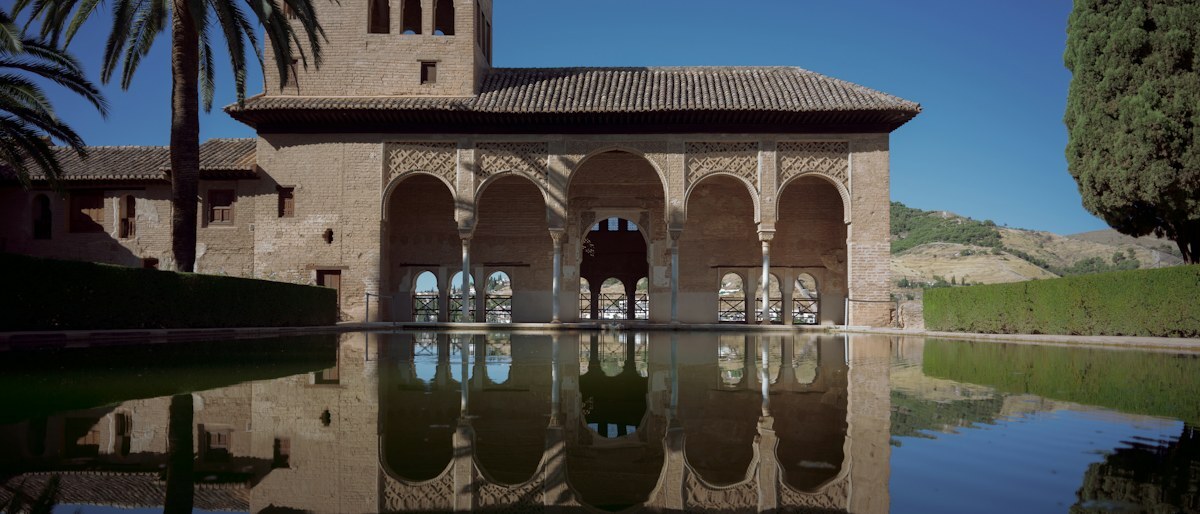
Muslim societies were never one empire or one culture. Architecture from Istanbul to Isfahan to Timbuktu, and literature in Arabic, Persian, Turkish, Urdu, Swahili, and Malay, show how a shared faith was expressed in many forms.
Colonial rule, reform, and the modern world
Between the eighteenth and twentieth centuries most Muslim-majority regions came under European colonial rule or influence. The Ottoman caliphate was abolished in 1924. Reform movements debated how to respond: through renewal of tradition, modernisation, nationalism, or political Islam.
Today Muslims number close to two billion, roughly a quarter of humanity, living in every region. Most live in Asia and Africa, not the Middle East. This guide offers a framework for further reading; it cannot settle contested historical debates.
Sources & further reading
- Qur’an 96:1-5 The passage associated with the first revelation.
- Encyclopaedia Britannica — Islamic world Survey of Islamic history across regions and periods.
- Pew Research Center — The Changing Global Religious Landscape Population estimates and distribution.
- PBS — Islam: Empire of Faith, Timeline A dated chronology of major events.
Original introductory summary, not a direct scripture translation. Prepared 21 October 2026. Qualified human religious review is pending. About our editorial approach.