The idea in brief
The Qur’an describes God through many names and attributes: the Merciful, the Compassionate, the All-Knowing, the Just, the Forgiving. Muslims call on God by these names in prayer and reflect on them to understand how God relates to creation.
Why names matter
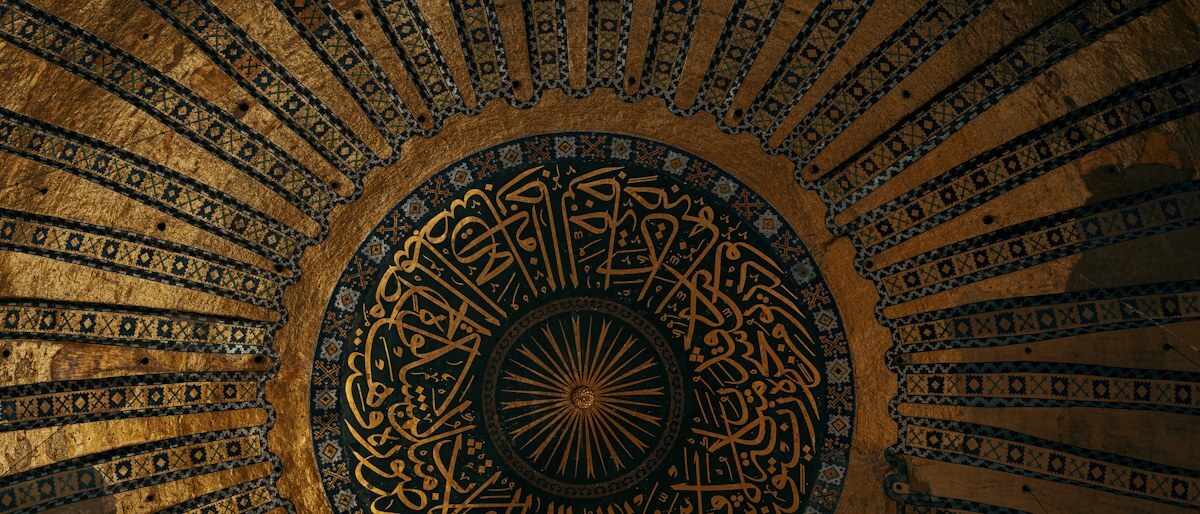
Islam does not represent God with images. Instead, the Qur’an describes God through names that express what He is like and how He acts: creating, sustaining, knowing, forgiving, judging. Qur’an 7:180 says that the most beautiful names belong to God and invites people to call on Him by them.
For Muslims, reflecting on these names is a way of knowing God without reducing Him to a picture. Each name opens a different aspect of the relationship between Creator and creation.
The names you will hear most
Every chapter of the Qur’an but one opens with the phrase bismillah al-rahman al-rahim: in the name of God, the Most Merciful, the Most Compassionate. Al-Rahman and al-Rahim are the two names Muslims meet first and hear most often.
Others include al-Khaliq (the Creator), al-‘Alim (the All-Knowing), al-Ghafur (the Forgiving), al-‘Adl (the Just), al-Salam (the Source of Peace), al-Wadud (the Loving), and al-Hakim (the Wise). Qur’an 59:22–24 gathers many names in a single passage.
Ninety-nine, and more
A well-known hadith in Sahih al-Bukhari speaks of ninety-nine names of God and the reward for the one who learns them. Lists of the ninety-nine are widely used in devotion and calligraphy. Scholars note that the Qur’an and hadith contain more names than ninety-nine and that no list is treated as closing the matter.
Allah is understood as the proper name of God, encompassing all the attributes. The other names describe; they do not divide God into parts. Tawhid, the oneness of God, frames the whole discussion.
Mercy and justice together
Two families of names appear repeatedly: those of mercy, gentleness, and forgiveness, and those of power, knowledge, and judgement. Muslim theologians emphasise that these belong together. God is not merciful at the expense of justice, nor just without mercy.
A hadith in Sahih al-Bukhari reports that God’s mercy prevails over His wrath. In practice this shapes how Muslims pray: with awe and with hope at the same time.
Calling on God by name
Muslims use these names in supplication, matching the name to the need: asking al-Ghafur for forgiveness, al-Razzaq, the Provider, in difficulty, al-Shafi, the Healer, in illness. Qur’an 17:110 says it makes no difference whether one calls on Allah or al-Rahman; the most beautiful names are His.
Someone learning about Islam can read the names as a portrait of how Muslims understand God. It is a good complement to the short chapter Al-Ikhlas, which states God’s oneness in four verses.
Sources & further reading
- Qur’an 7:180 The most beautiful names belong to God.
- Qur’an 59:22-24 A passage gathering many of the names.
- Qur’an 17:110 Calling on God by His names.
- Sahih al-Bukhari 2736 The hadith of the ninety-nine names.
- Sahih al-Bukhari 7404 God’s mercy prevails over His wrath.
Original introductory summary, not a direct scripture translation. Prepared 21 October 2026. Qualified human religious review is pending. About our editorial approach.