The idea in brief
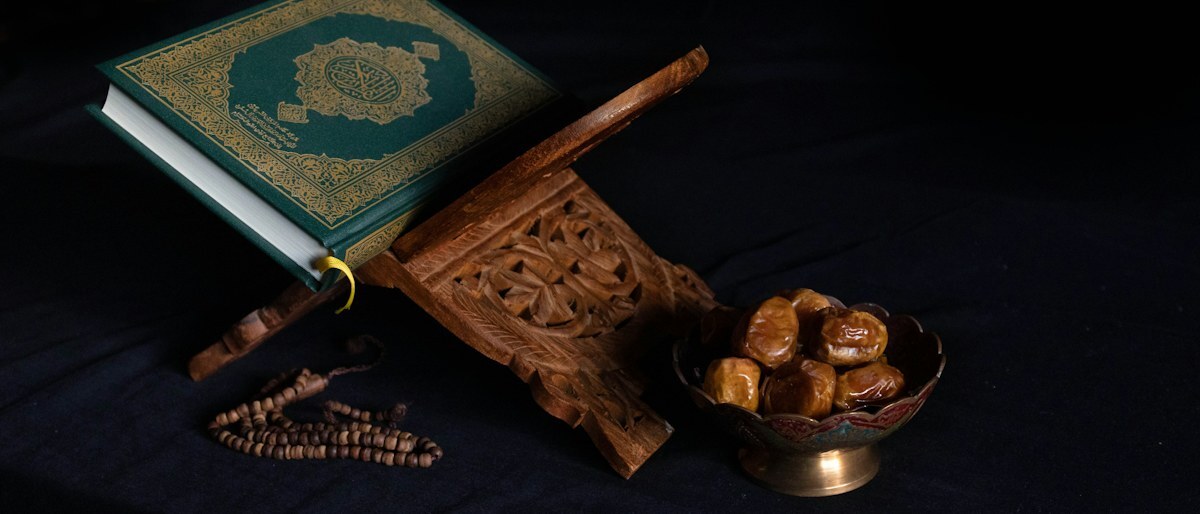
Ramadan is the ninth month of the Islamic calendar, in which the Qur’an is believed to have first been revealed. Adult Muslims who are able fast from dawn to sunset, give more in charity, pray additional night prayers, and read the Qur’an. The month ends with the festival of Eid al-Fitr.
Why this month
Qur’an 2:185 identifies Ramadan as the month in which the Qur’an was sent down as guidance. Fasting during it is prescribed in 2:183, with the stated purpose of developing taqwa, God-consciousness. Because the Islamic calendar is lunar, Ramadan moves about eleven days earlier each year and falls in every season over a lifetime.
The fast is one of the five pillars. It is an act of worship first; its benefits for health, empathy, or discipline are secondary and not its justification.
A fasting day
The day begins with suhoor, a pre-dawn meal, followed by the dawn prayer. From dawn until sunset nothing is eaten or drunk, including water, and sexual relations are suspended. Muslims are also expected to guard their speech and temper; a fast spent in argument or gossip is considered diminished.
At sunset the fast is broken, traditionally with dates and water, followed by the sunset prayer and the main meal, iftar. Families, neighbours, and mosques often share iftar, and inviting others to break the fast is considered a virtue.
Nights of prayer and the Night of Power
After the night prayer many Muslims attend taraweeh, additional congregational prayers in which long portions of the Qur’an are recited; over the month the whole book may be completed. Reading and listening to the Qur’an increase at home as well.
The last ten nights are held to be especially blessed. Among them is Laylat al-Qadr, the Night of Power, which Qur’an 97 describes as better than a thousand months. Many Muslims spend these nights in prayer, and some withdraw to the mosque for a retreat called i‘tikaf.
Who does not fast
Fasting is for adults in good health. The Qur’an exempts the ill and travellers, who make up the days later, and tradition extends accommodations to pregnant and nursing women, the elderly, those with chronic conditions, and women during menstruation. Children are not required to fast, though many try short fasts as they grow.
Someone who cannot fast at all may feed a person in need for each day missed. Decisions about health and fasting are made with medical and religious advice; no one is expected to harm themselves.
Generosity and Eid
Ramadan is the season of giving. Many Muslims pay their annual zakat during the month, and additional charity is encouraged. Before the Eid prayer every household gives zakat al-fitr, a small fixed amount per person, so that the poor can also celebrate.
Eid al-Fitr, the festival of breaking the fast, begins the following month with a congregational prayer in the morning. It is marked by new clothes, visits, gifts, food, and greetings. If you know Muslims, “Eid Mubarak” is the usual greeting, and a visit or message is welcome.
Sources & further reading
- Qur’an 2:183-185 Fasting prescribed; Ramadan and the Qur’an; exemptions.
- Qur’an 97 The Night of Power.
- Qur’an 2:187 The night of the fast and the boundaries of the fasting day.
- Sahih al-Bukhari 1904 Fasting and guarding speech and conduct.
Original introductory summary, not a direct scripture translation. Prepared 21 October 2026. Qualified human religious review is pending. About our editorial approach.